
Blinkwise
Roles : UX / UI design, Branding
Tools : Figma, Photoshop
Type of project : Concept
Project overview
Brainwise is a fictional e-learning platform that offers new ways to boost user engagement. This project aims to design a platform that improves student engagement and knowledge retention.
PROBLEM
Self-directed online learners often drop out of courses because the content is too passive and lacks interactive elements.
Many e-learning platforms focus on the quantity of content offered, but less on the quality of the learning experience. The lack of interactive features can lead to a gradual loss of motivation and, in some cases, to dropping out of the course.
GOALs
Secondary Research
A recent study (Shao & Chen, 2020)¹ shows that online learning platforms often struggle to maintain user engagement. I designed a flashcard feature based on spaced repetition and active recall, two proven methods for promoting knowledge retention and encouraging more active learning.
The flashcard feature encourages users to actively recall information rather than passively review it, and to revisit the material at spaced intervals. In addition, flashcards introduce an element of gamification, making learning more fun and engaging by allowing users to track their progress and compete against themselves.
hypothesis
If students can actively practice recall and spaced repetition using flashcards, they will be more likely to stay engaged and complete their courses.
IDeATION
The integration of memory cards has resulted in several features:
Daily flashcard quiz on the home page.
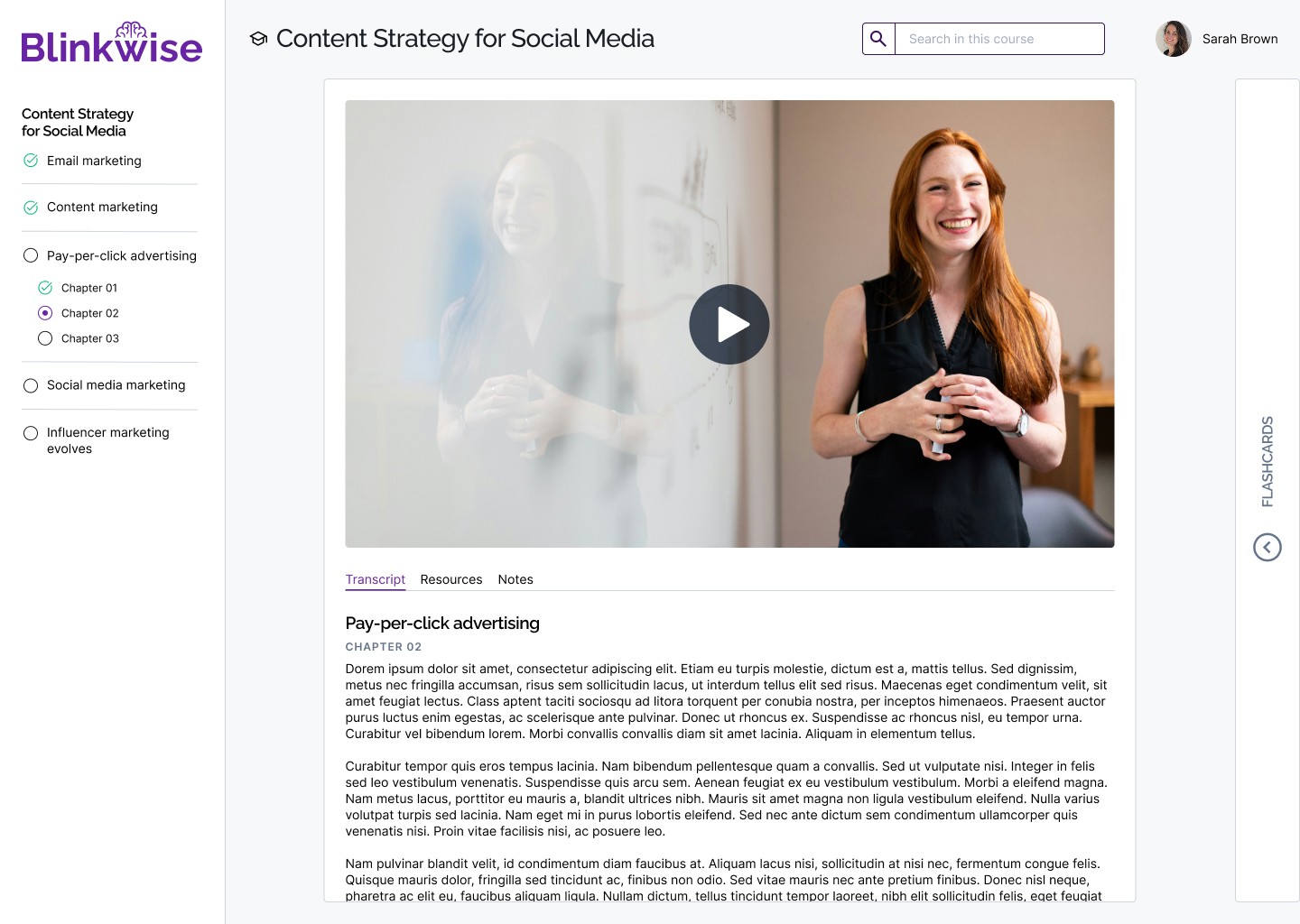
A collapsible panel for quickly creating flashcards during class.
A page dedicated to organizing flashcards and flashcard sets, as well as a tab for reviewing them.
A progress tracking system to motivate the user.
The flashcards will be sorted by course, and then by deck. This structure will be consistent throughout the site.

User flow:
Create a flashcard
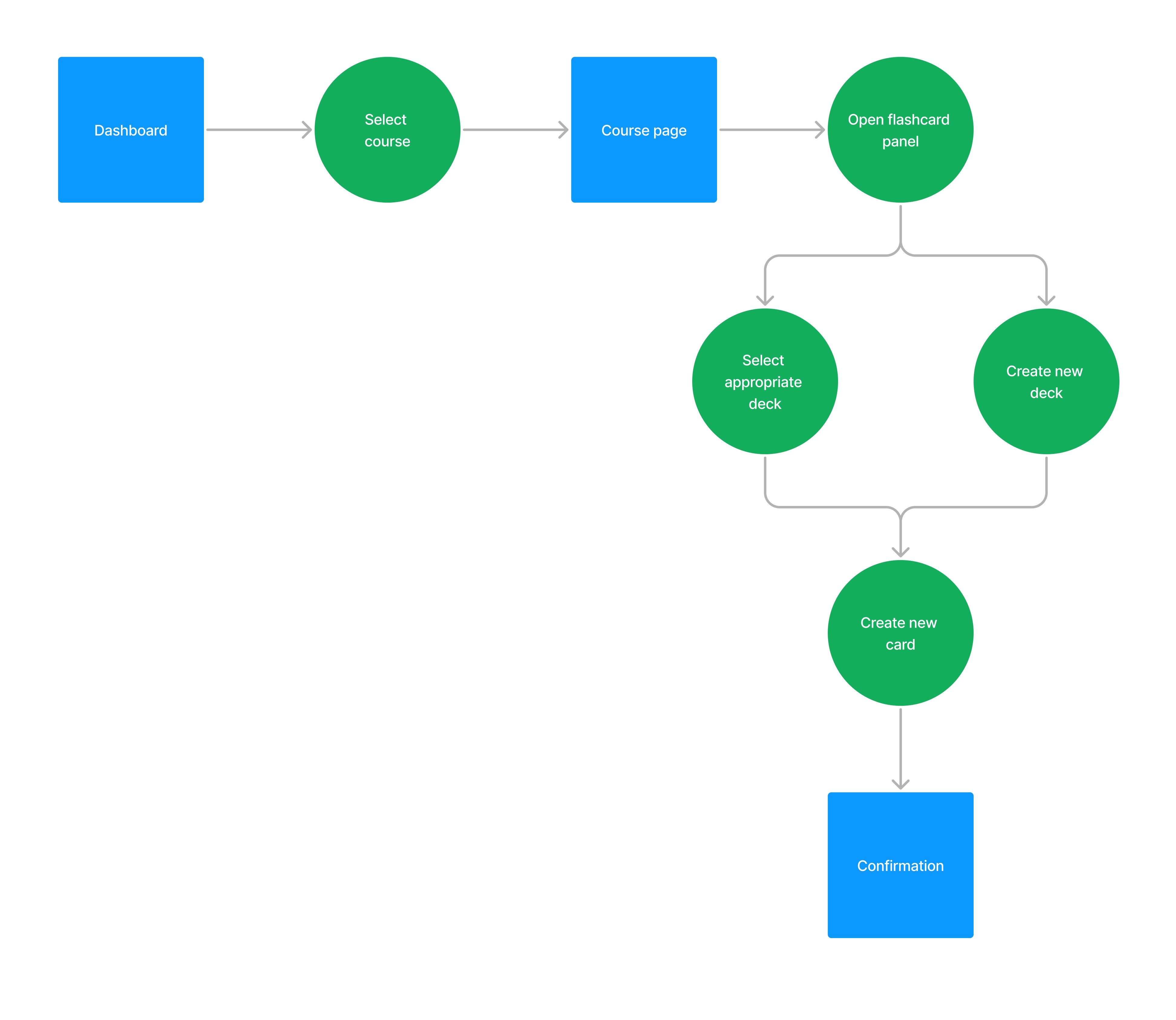
information architecture

Conception
paper Wireframe
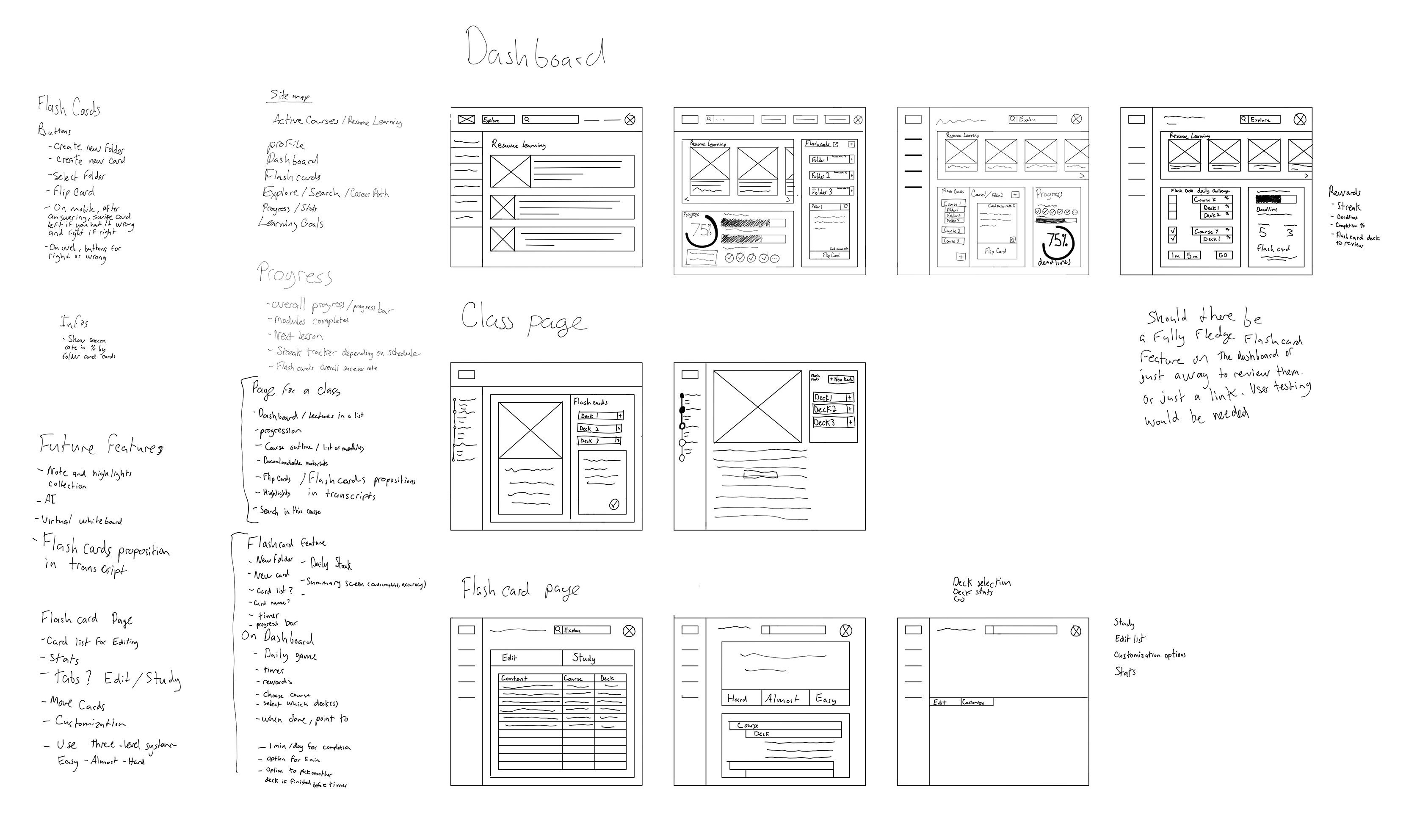
lo-fi mockup
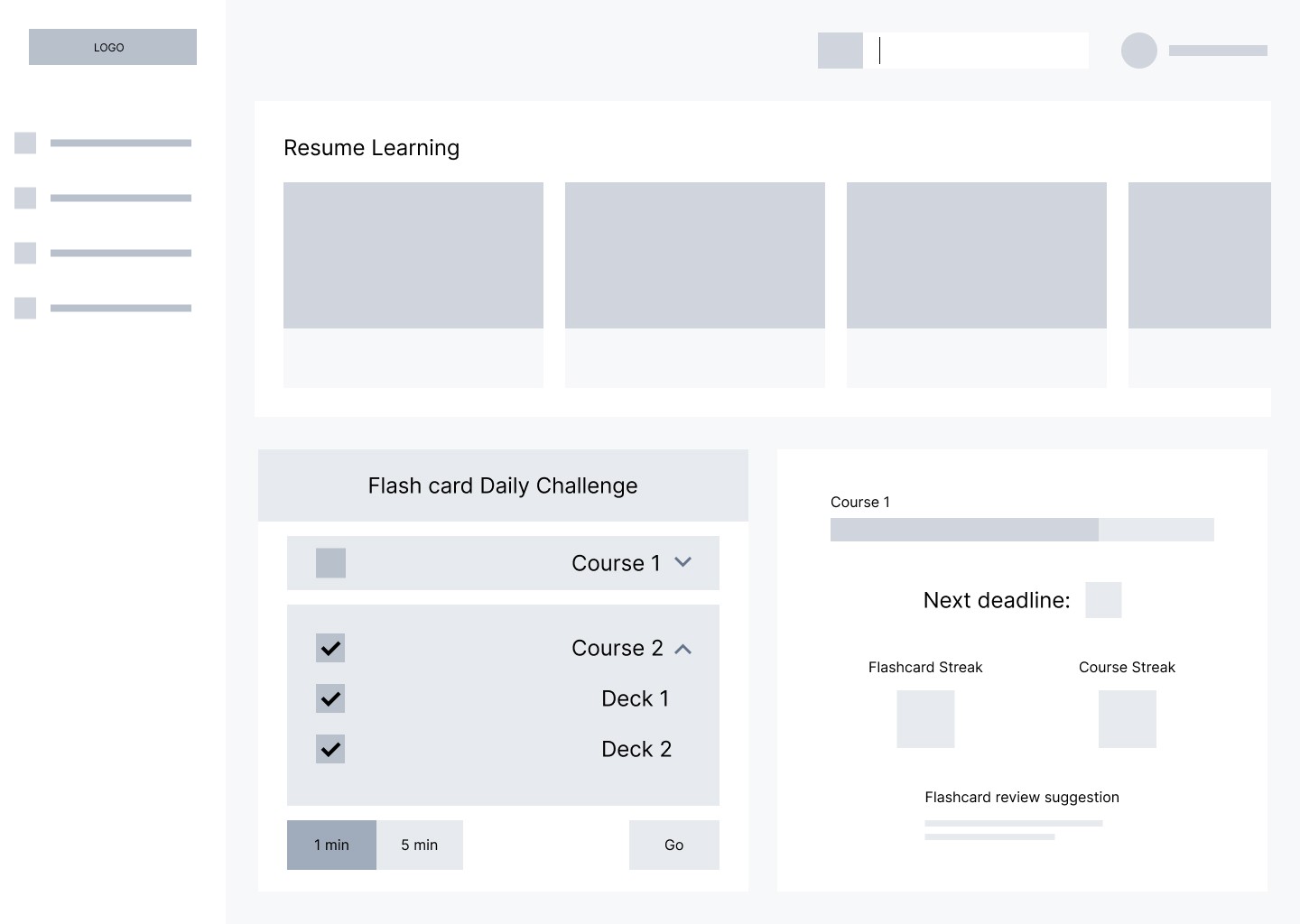
Home
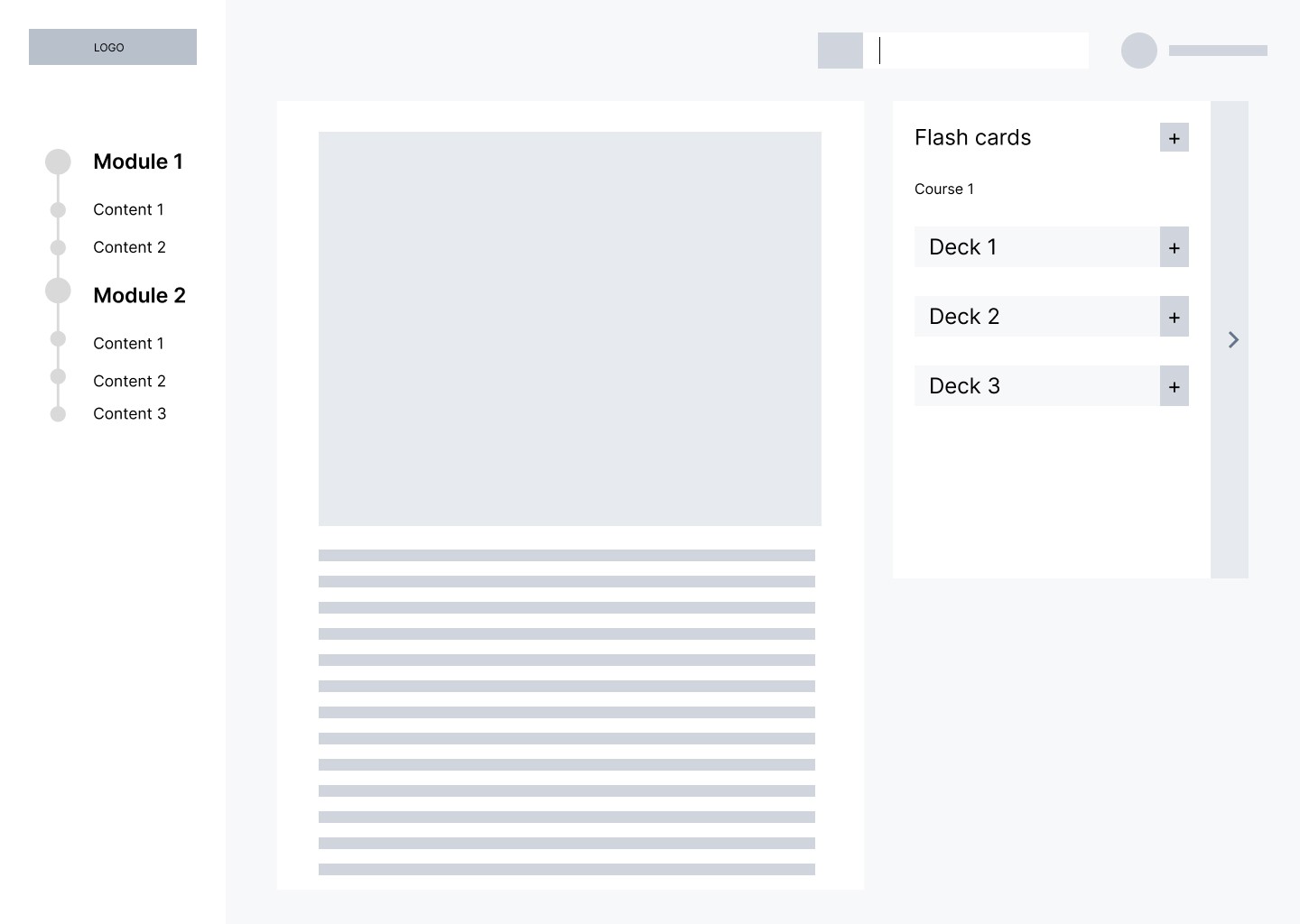
Course page

Flashcard settings page
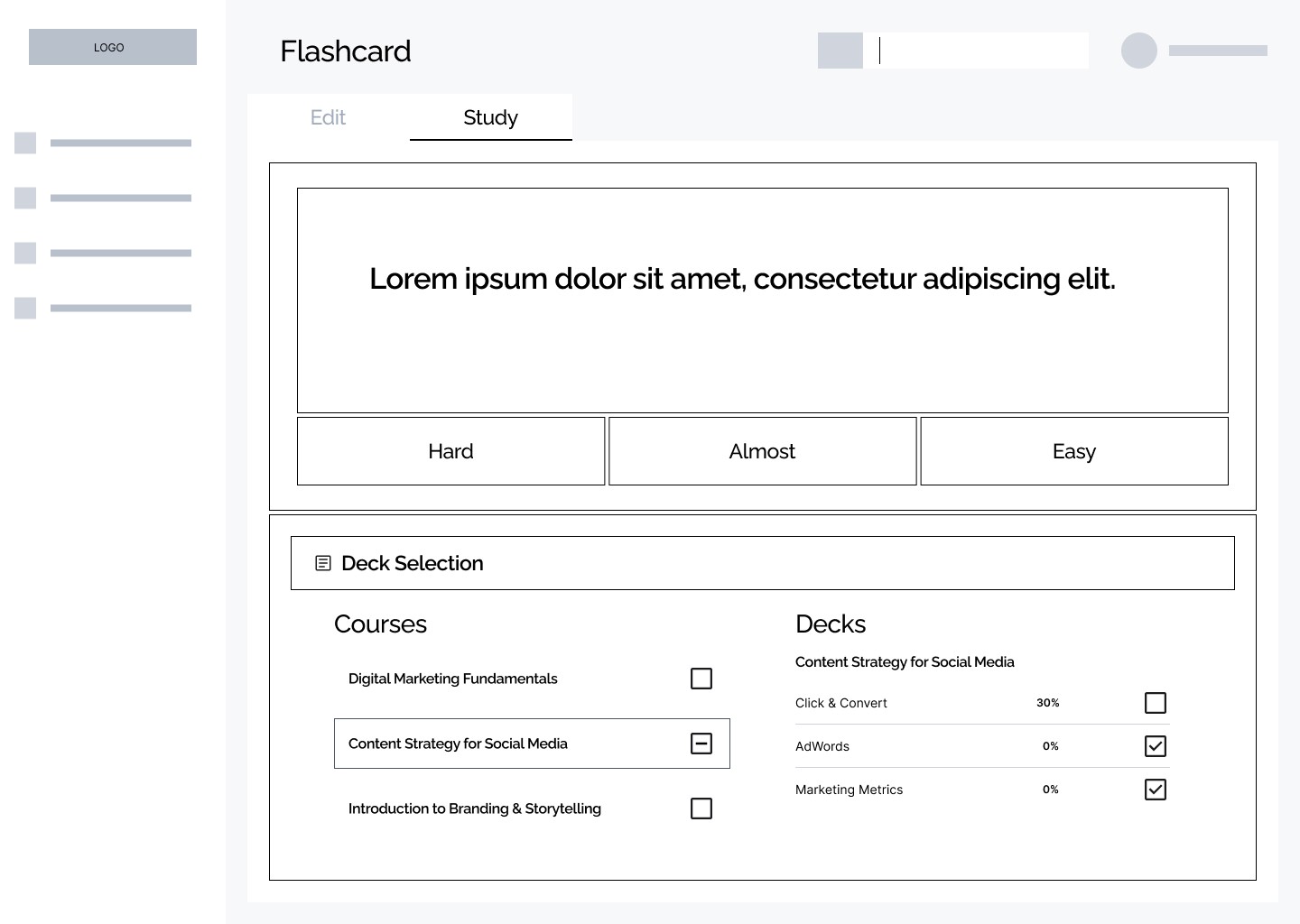
Flashcard study page
hi-fi mockup



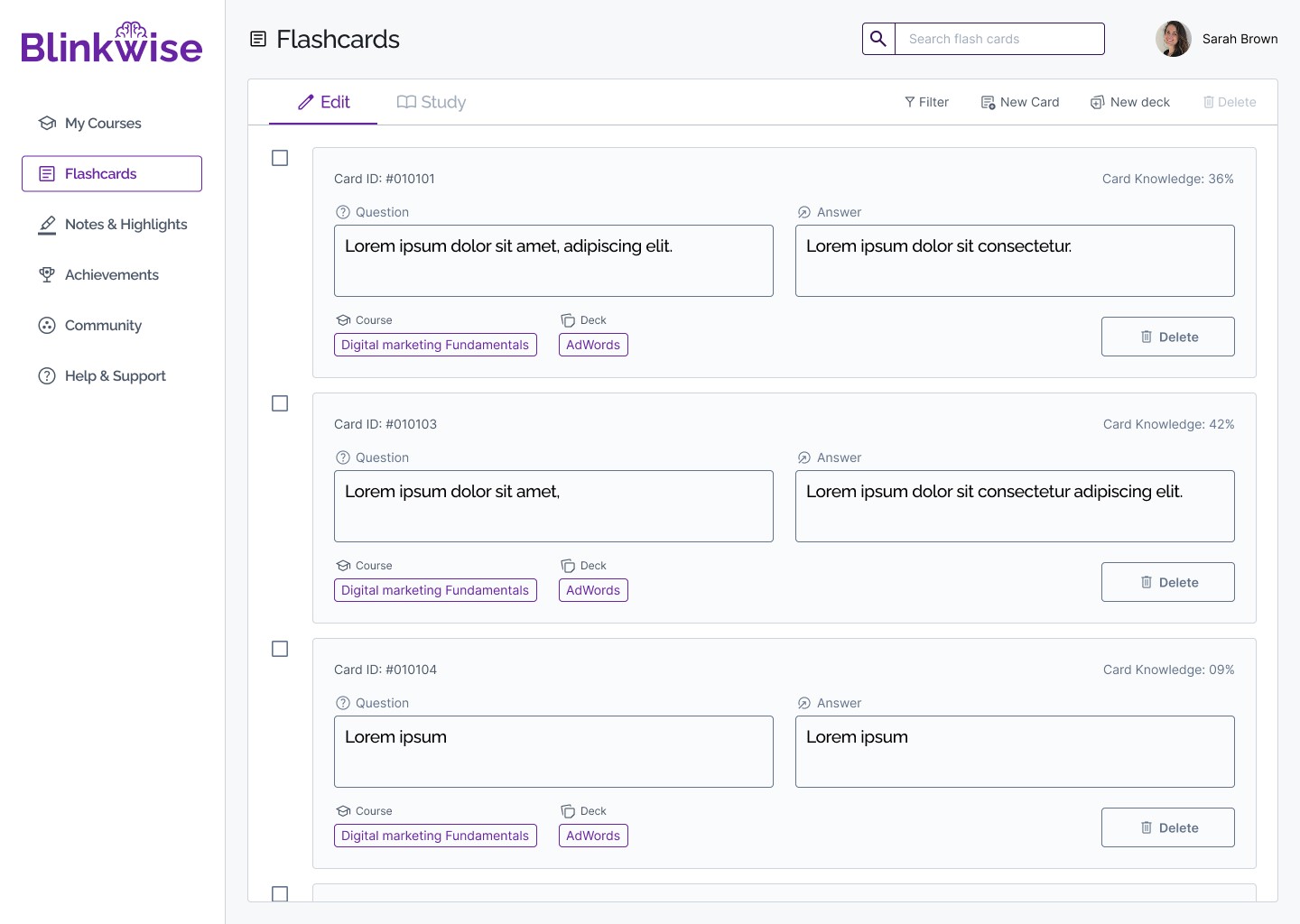
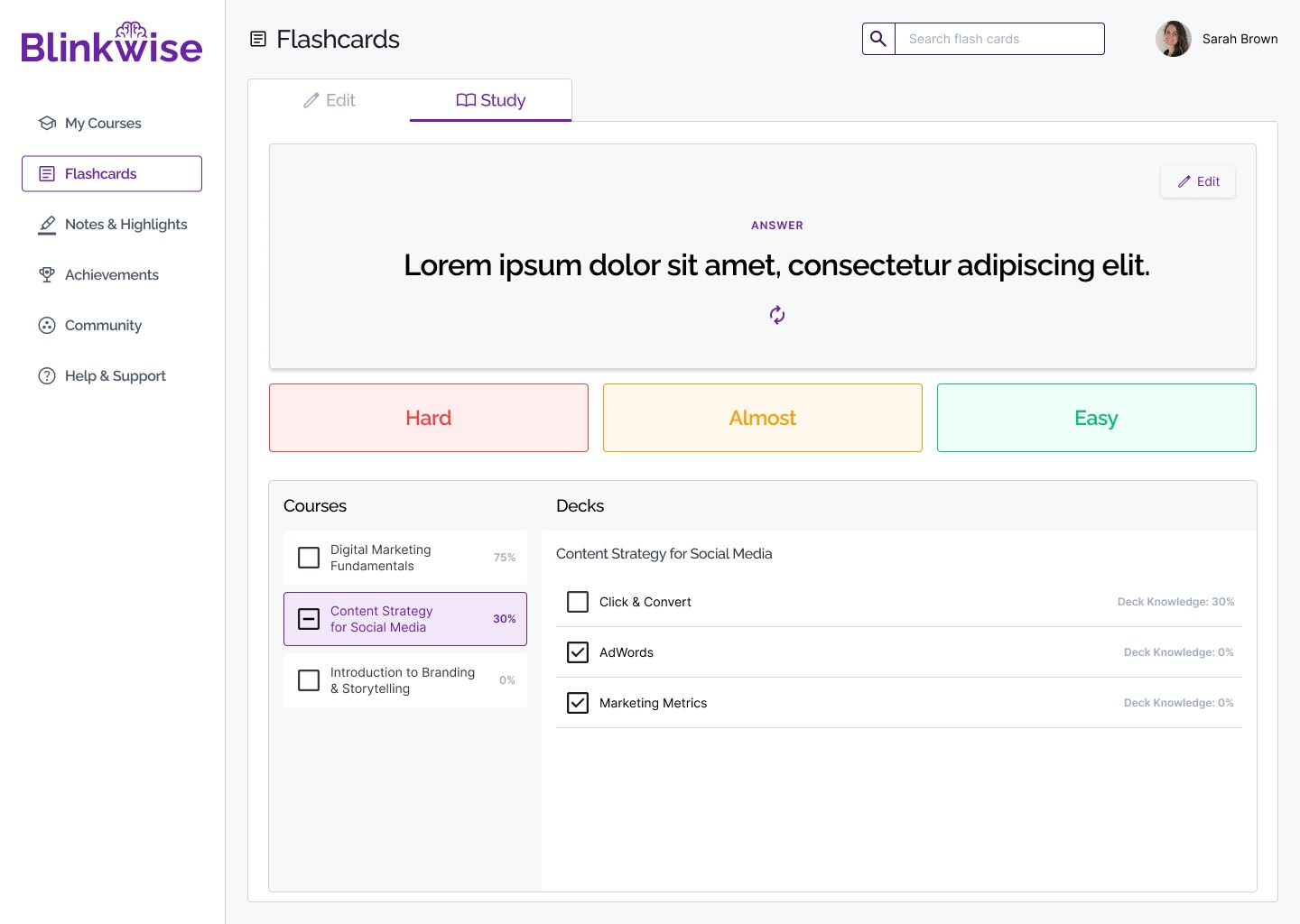
flashcard pages
The editing page allows you to create, delete, edit, and organize flashcards. For organization purposes, flashcards are first sorted by course and then by deck. Decks are created by the student.
The study page is a dedicated space for learning flashcards. The student can filter the flashcards to study by course and by deck.
Expected Results
If implemented, Blinkwise could enable users to:
Be more engaged in their courses, which could increase the likelihood that they will complete them.
Retain the information they study more easily
next steps
Conduct user tests to validate the effectiveness of memory cards.
Observe long-term engagement patterns.
Explore additional features such as:
Virtual whiteboard for consolidating learning.
Integration of an AI tutor.
What I've Learned
Secondary research can provide a solid foundation, but hypotheses cannot be verified without testing them with real users. I also learned to prioritize a single, high-impact feature (flashcards).